In February, I will be travelling to Atlanta, where I will give the premiere performance of the complete Twenty Views of the Trombone at Eyedrum Art and Music Gallery, at the invitation of Olivia Kieffer. This is the third in a series of posts about that piece and how it has come to be what it is.
Read the first post, on the history of this piece’s composition so far, here.
Read the second post, specific comments on the first seven movements, here.
I performed Twenty Views of the Trombone in October 2013 on a concert of the Cleveland Composers Guild. At that time, it was still a work in progress, with only eight or nine pieces complete, but you can listen to that performance here.
The premiere performance will be Friday, February 17 at 8pm at Eyedrum. Admission is $7 at the door.
I will be tweeting using the handle @MattSComposer before, during, and after this process. Join the conversation with #twentyviews–the final post in this series will be a Q&A, so send me your questions about the piece, or composing, or life in general, and I’ll do my best to answer them.
Twenty short pieces is a lot to keep track of, even for the person who is writing and performing them. I’m not completely sure how to keep the audience on track–perhaps they should open their phones to this blog during the performance!
At any rate, here are my thoughts on seven more pieces, in the order in which I am currently planning to play them at the premiere.
8. What It Will (Not) Be Like
Here’s a movement in imitation of the strict serial style of Arnold Schoenberg, who claimed that he had invented a musical language for the next millennium. It didn’t work out quite that way. From time to time, I have included twelve-tone rows in my work (in the final section of Martian Dances, for example, but this “What It Will (Not) Be Like” is my only purely dodecaphonic composition to date. Also following Schoenberg, it follows a traditional model–Baroque binary form, with the 3/8 time signature suggesting a siciliano or slow gigue. I have found this sort of approach useful from time to time, particularly when I was starting to compose and struggling with melody. I’m less conscious of my anxiety about melody these days–I understand melody as an outgrowth of rhythmic expression, and I have also learned to be patient with my material and trust that the first note I try is not necessarily the right note. I will never be an essentially melodic composer, but as someone writing a 40-minute piece for unaccompanied trombone would have to be, I have made my peace with melody (by making pieces with melody… ha!).
This was one of two movements that were composed for and first performed at the 2011 Aspen Composers Conference, an annual event organized by Natalie Synhaivsky adjacent to the Aspen Music Festival in Colorado, but not affiliated with it. I drove from Guymon, Oklahoma to Aspen, and the trip from the High Plains, over the Continental Divide was incredible. In the summer, I highly recommend the “back” route into town, avoiding Denver. My hotel was wonderful (and cheap in the off-season), and I met some intriguing people. It was one of my favorite trips to date as a musician. The conference featured both paper presentations (more on mine later) and a recital, so the ability to play my own piece without assistance paid off again.
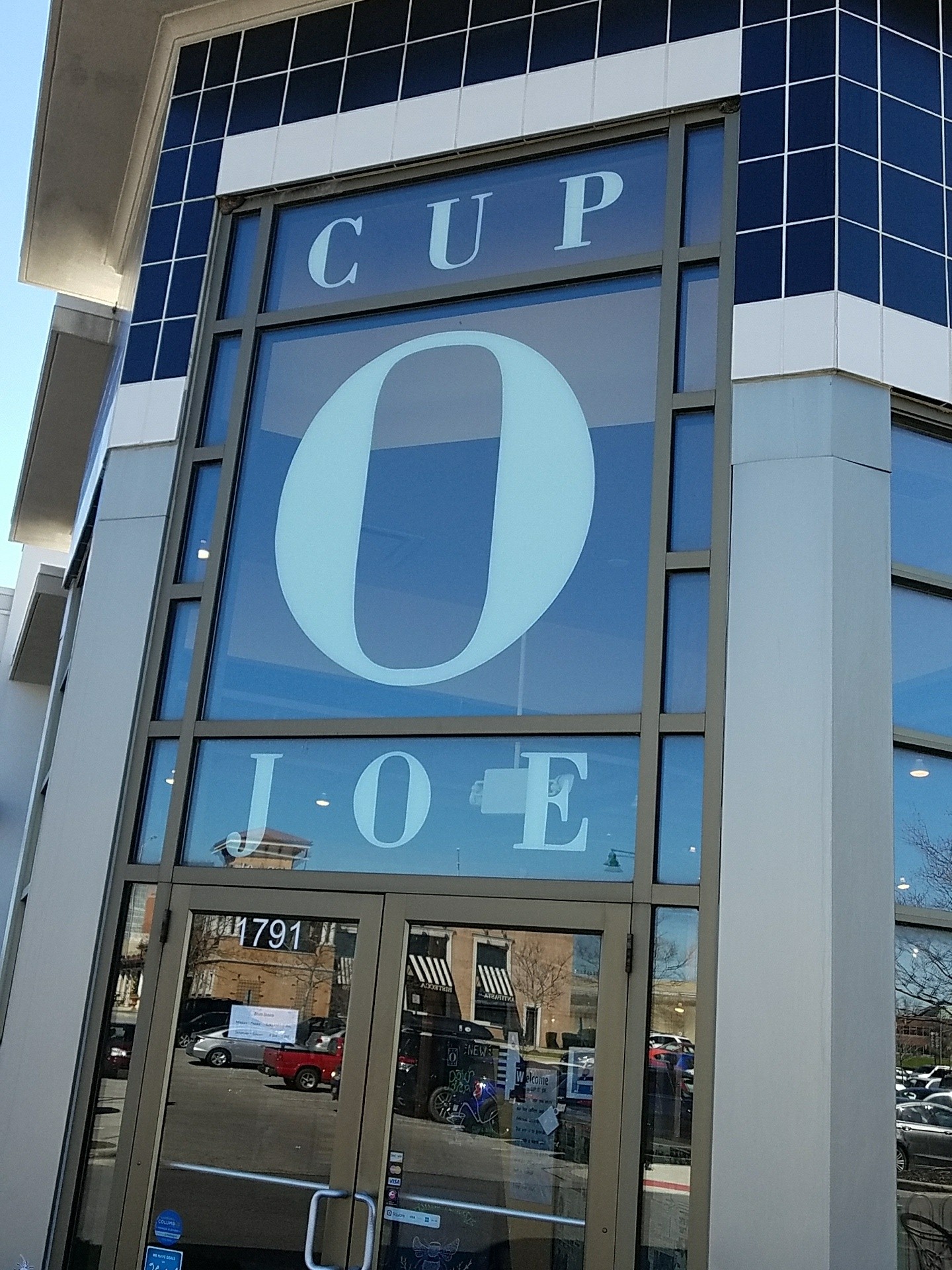
9. What It’s Like After a Cup o’ Joe
This movement is one of my favorites. It was written and first performed in late 2012 for a John Cage Musicircus held at MOCA Cleveland in December of that year. It was also one of the first pieces I wrote after I moved back to Ohio from Oklahoma, and one of the last pieces, along with Lady Glides on the Moon, and La Voyage Dans La Lune, that I wrote prior to moving to our house in Willowick. It stands at the end of one era and the beginning of the next. It’s the first piece to be solidly technical in nature–something that a better trombonist might find missing from Twenty Views of the Trombone as a whole, but I find that it lies well on the instrument while being sufficiently jittery, as befits the title.
The title has two meanings: first, the effects of a cup of coffee (a drink I do not particularly like, but imbibe on occasion); second, a more personal, autobiographical meaning. When I returned to Ohio in 1999, newly single, I did a fair amount of online dating. My preferred place to meet a woman for the first time was a coffee shop near the Ohio State campus called Cup o’ Joe. After one of these meetings, my adrenaline would be high, and even though I didn’t usually order coffee (they had a great cider drink called Hot Apple Pie), I would be on the same kind of comedown. None of those meetings worked out, thankfully: the first time I met Becky, we ate Mexican food, which is a thousand times better than a lousy cup of coffee.
10. What It Could Be Like (II)
This movement was composed in 2015 and first performed at the Manchester New Music Festival at Manchester University in Indiana in March 2015. This is the second movement that considers what might happen after death–in this case, a minimalist depiction of the eternal worship and praise that take place in Heaven. My limited mind, of course, chafes at this more than a little–it may be the many distractions of this life, or it may be my sinful nature, but I have trouble focusing on worship for an hour or so each week. Unending worship for eternity? To my busy, ever-spinning mind, that doesn’t sound like Paradise, although I hope to find that it is, in some way that I just can’t understand. I rather like this description, which seems to be based in Scripture. “The best music you’ve ever heard will pale compared to the music of heaven. The most awesome worship you’ve experienced on earth is but a dim reflection of the praise we will render around the throne of God.” Of course, he earlier describes Heaven as “more fun than the best party you ever attended,” which, frankly, is a relatively low bar for me, since I’m not much of a party-lover, notwithstanding a few very memorable parties I’ve attended.
11. What My Greatest Hits Are Like (Synecdoche South Africa and Elementary, My Dear Noah)
If there are two pieces so far that seem to be making an impact, they are my 2009 piece for horn and marimba, South Africa, and the music I wrote for an educational YouTube video about the elements of music, Elementary, My Dear Noah. South Africa was commissioned by Nancy Joy of New Mexico State University after we met on a flight from Columbus to Albuquerque (thanks to my wife, who started talking to Nancy when she saw her horn case). It was premiered in 2010 at the International Horn Symposium by Nancy and marimbist Fred Bugbee, and has caught on a little bit. It is by far my best-selling composition as of this writing, and is one of my most-performed (my most-performed music is three pieces from my piano cycle Starry Wanderers that Avguste Antonov has had in his repertoire for several years now; South Africa has been performed by a greater number of players). I harbor hopes that South Africa will one day appear on repertoire lists.
Elementary, My Dear Noah, is a surprise hit. I wanted a short YouTube video that would introduce my students to the seven elements of music. I have taught the same list of seven elements for twenty years now–melody, harmony, rhythm, tempo, timbre, dynamics, and form. It works for middle school and it works for college. My current music appreciation textbook, Take Note by Robin Wallace, substitutes meter and texture for tempo and dynamics, but ametrical music is quite common, and texture is an outgrowth of rhythm and timbre, so, I have my reasons for holding on to my list, which was taught to us at CCM in Elementary General Methods by Dr. Rene Boyer-White. At any rate, in June 2013, I decided to make the video and try it out on my Popular Music class at Lakeland. It took an afternoon to create, from start to finish, using the sound library included with Sibelius 6, along with some vocals by my family. I began incorporating it in my classes regularly, but made the video public on YouTube, thinking others might find it useful, and at some point, it seems to have become a resource for music students around the US and around the world. As of this writing, it has amassed over 33,000 views, far surpassing all my other videos combined, and giving it the largest audience of any of my compositions. The average view time is about half the length of the video, so at least some people seem to be watching most of it, leading me to think that it is helping someone. Viewing also seems to spike at the beginning of fall, spring, and summer semesters, just when a class like mine is covering the topic of the video. I’m no YouTube star, but it’s fun to watch the counter tick upward.
“What My Greatest Hits Are Like” is a mashup for trombone of material from South Africa and Elementary, My Dear Noah. It also constitutes a synecdoche of both pieces, and of my compositional output as a whole. It was composed in 2016, and will be premiered at Eyedrum this month.
12. What It’s Not Quite Like
Along with “What It Will (Not) Be Like,” “What It’s Not Quite Like” was composed in the summer of 2011 for a premiere at the Aspen Composers Conference in August 2011. It partnered with my presentation there, “Quintuplous Meter: Notations and Applications.” I spent several years considering the best way to notate five-to-a-beat music, and incorporating it into my compositions. It appears in my clarinet concerto Daytime Drama, my Piano Sonata and Piano Concerto, and in this short piece, which is a demonstration, as much as anything else, of what I still think is an untapped rhythmic resource. As unlikely as it seems to catch on, it is fun to have a notational quirk to pull out from time to time, and I’m thinking that I haven’t used it in a while, so maybe it’s time to write something with it again. From 2010 to 2012, I presented on quintuplous meter in several venues, where it was generally well received by colleagues in music theory and composition. Most fun was presenting it as a poster session at the 2010 College Music Society National Conference. My poster was in the front of the poster area, near a set of elevators, and I got to talk to nearly everyone who came by. I also met Nolan Stolz, who I had known only through the Internet before, and Rachel Ware Carlton, with whom I would end up collaborating on a piece (that we still hope to be able to premiere!). Here’s the PDF of my poster.
13. What It Might Have Been Like (I)
The tracks of our lives all have places where they fork irrevocably. It’s ironic that the first complete performance Twenty Views for the Trombone will take place in Georgia, a state where I once assumed that I was going to spend a substantial chuck of my life. I lived in Macon for one frustrating, life-changing year, and in a different universe, I would have stayed much longer and become a person who I would be hard-pressed to recognize, I think. “What It Might Have Been Like (I)” imagines how that might have turned out, a counterfactual, as it were.
This movement was composed in late 2016, and will be premiered at Eyedrum this month. I knew that I wanted to learn the technique of multiphonics, and incorporate it into some of the movements I had yet to write, and this piece includes both that and some tongue clicking. It sounds nothing like the rest of my music, as that life unlived in Macon would have been nothing like my life has been since then.
14. What It Once Was Like (II) (Synecdoche Homo sapiens trombonensis)
In 2005, I was finishing my master’s degree at Ohio State, and my advisor, the late Donald Harris, wanted me to write a composition as my thesis. He suggested a trombone concerto with winds, a piece that would certainly play to my strengths. The result was Homo sapiens trombonensis, and when I showed it to Russel Mikkelson, he immediately agreed to program it the following spring, so in March 2006, I appeared as the soloist in my own concerto with the Ohio State University Wind Symphony, under Dr. Mikkelson’s baton. It was one of the highlights of my career as a musician so far. In 2013, Mark Wade invited me to play the piece again with his band at Denison University, and I began to relearn it, as it had been quite some time. At the same time, I was preparing for a performance of Twenty Views of the Trombone for the Cleveland Composers Guild. It made sense to kill two birds with one stone, so I created a “highlight” reel of the concerto to premiere that October, with the concerto performance following in November, the last performance of my music before the birth of our daughter Melia.
The time I spend with the trombone has dropped significantly since I returned to Ohio to take my current position at Lakeland Community College, although I am hoping to change that. I did not immediately start looking for gigs, and the demands of family life limit the time I can spend honing my skills as a trombonist. Thus, “What It Once Was Like (II)” is a snapshot of a time when I was still growing as a performer instead of (I’ll kid myself) holding the line.
And at this point, I begin to wonder–is there something valedictory about this piece and this premiere? It seems unlikely that the trombone will ever be as important in my life as it once was. Am I in a way getting ready to say goodbye? My hope is that the answer is “no,” and I’ve recently started teaching trombone again, and perhaps as my children get older there will be more chances to play. Since 1986, the trombone has been a part of my life, and ready to take whatever time I chose to give to it. As a fifth-grade band student at Windermere Elementary School, I had no idea that I would still be worried about the trombone as a grown-up. In those days, I wanted to be an astronaut.
This is the third of a short series of posts about Twenty Views of the Trombone. The first post gave an overview of the history of the composition of the piece. The second post describes the first seven movements in detail, and the fourth will describe the remainder of the piece.
Bonus: Here is the coffee shop Cup O’ Joe in Columbus, Ohio that inspired What It’s Like After a Cup O’ Joe: